hola. hi. salaam.
Designing a home that thinks ahead
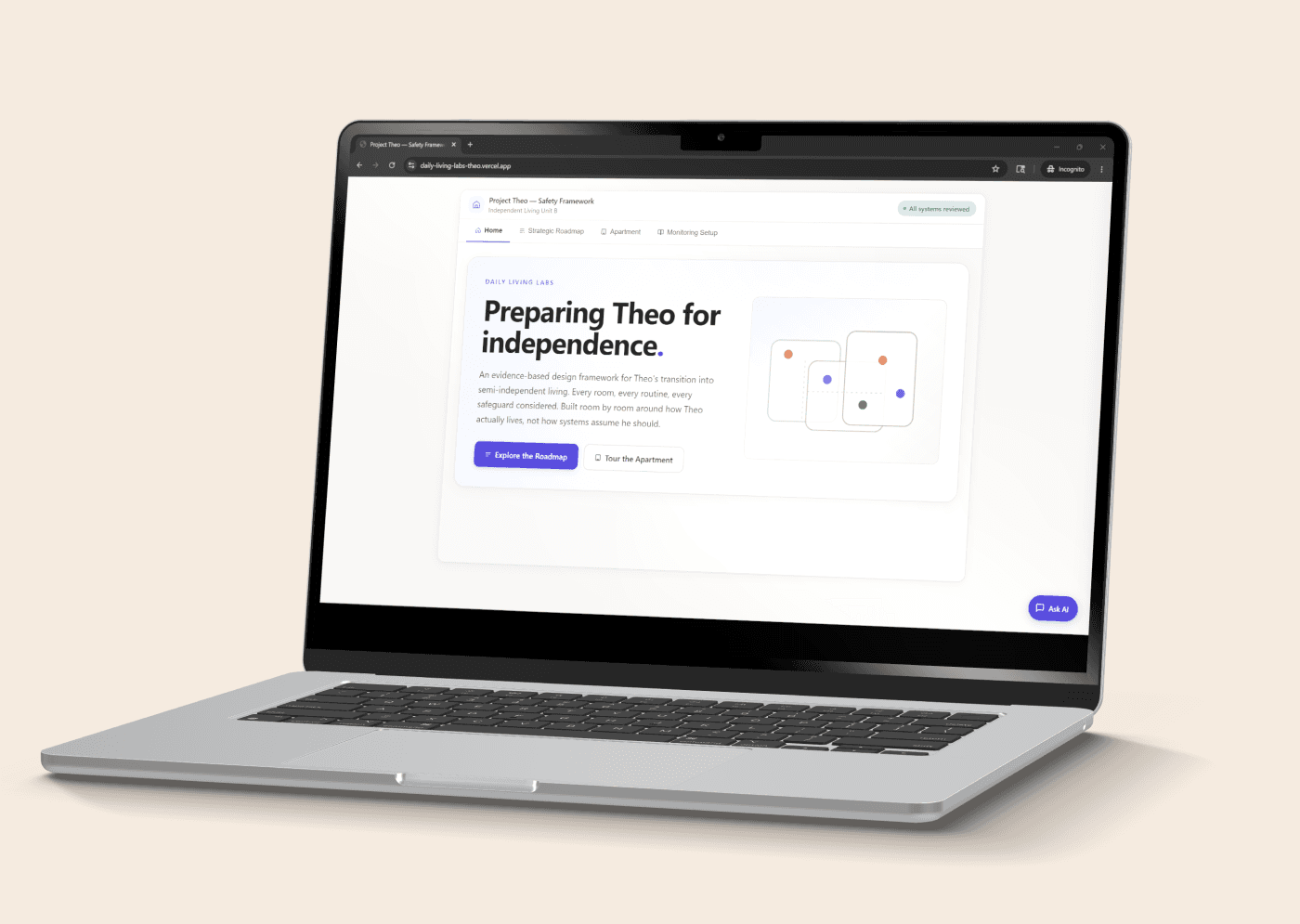
Helping a young adult with autism transition into semi independent living through ambient smart home technology, an AI guided platform, and a multi year strategic roadmap.
Role
Team Lead, UX Researcher, Designer
Timeline
6 weeks of active design
Team
4 designers
Client
A family preparing a custom triplex for their adult son
Deliverable
Interactive site, 3D apartment model, Home Assistant system, AI chatbot
context
A 21 year old who has never been left alone is about to move into his own home
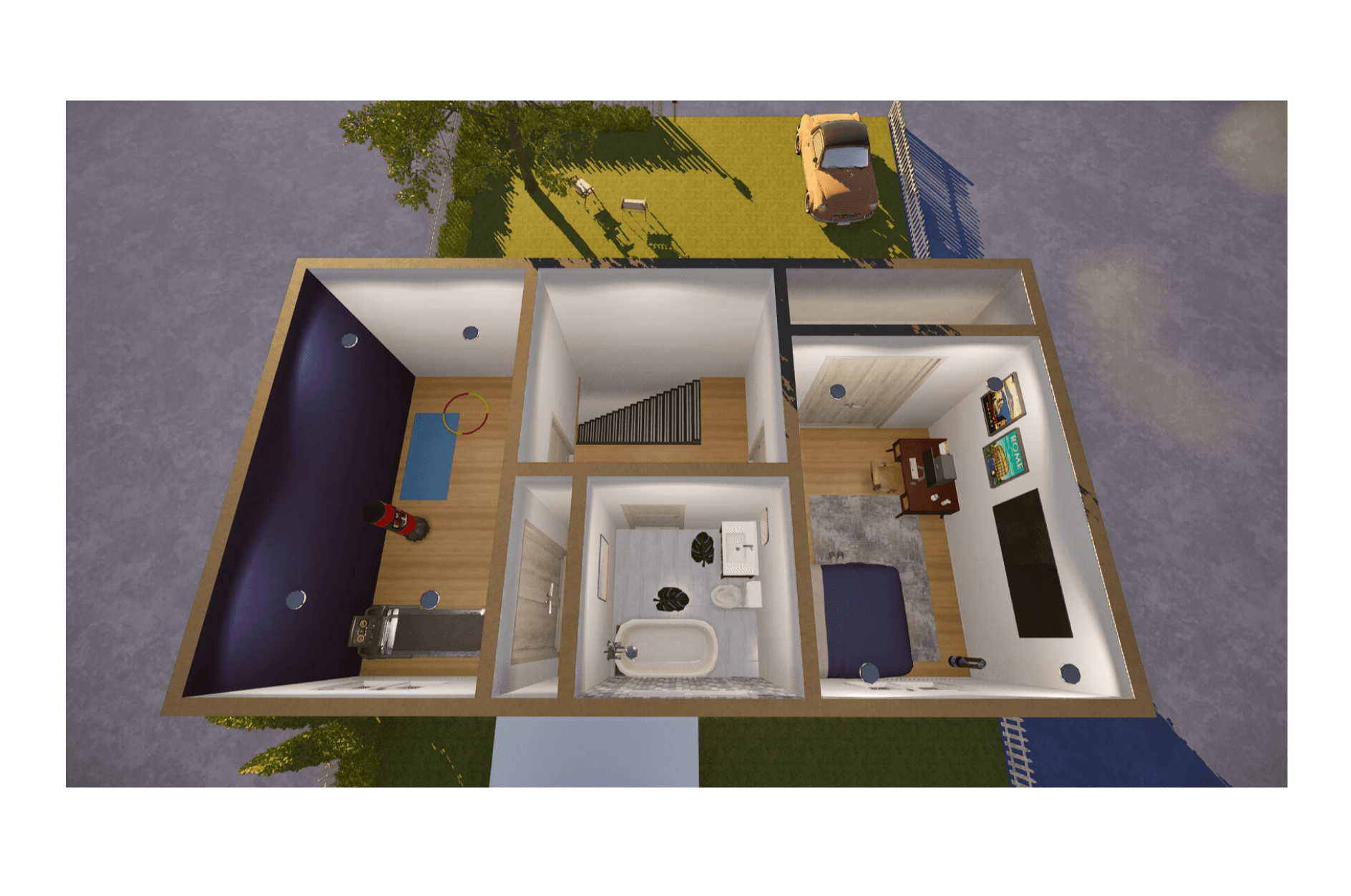
Theo has never been left alone. At 21, with autism, he's moving into a home designed for semi independent living. His family is preparing a custom triplex for him, with one unit reserved for a live in caregiver and two units for Theo and his routines. They want him to build real independence, learn to cook, manage his medications, and live with dignity, without putting him or his home at risk. The challenge they brought us: design a system that supports that future, not just the next 6 weeks.
constraints
Four constraints that broke every standard playbook we found
Two findings from the parents shaped every constraint that followed.
Mother
Father
research
Research weighted heavily, because we had to build the design brief ourselves
- 4 Dovetail transcripts totaling over 5,500 rows of dialogue
- 3 in depth stakeholder interviews with the mother, father, and the current in home caregiver
- Ongoing follow up over email between sessions
- 2 site visits, one for initial observation, one to share progress
- 1 walkthrough of the future triplex
- 1 room by room frustration assessment tool I built to capture issues the family hadn't yet articulated
Theo doesn't need behavioral intervention. He needs an environment that anticipates, prompts, and absorbs.
Every design decision after that point traced back to this.
synthesis
Synthesis turned 5,500 rows of dialogue into a brief the team could design against
solution
Four deliverables that work as a system, not as standalone artifacts
The family received a comprehensive plan that significantly advanced their prior efforts and gave them a starting point they could implement. Faculty noted the team had transformed ambiguous needs into a real, usable product.
The family said the deliverable was the first thing they had seen that addressed future scenarios they couldn't yet predict. They've been identified as the founding client for a broader platform serving other families in the autism community, and the father has offered to connect the program to additional families.
Concrete handoff outcomes
- Home Assistant devices shipped to the family for hands on testing
- Site archived for long term access beyond the academic timeline
- Embedded feedback loop established between the family and future student teams
- Fall semester capstone integration confirmed
My contribution
reflection
What I'd do differently, and what AI did in the process
Three things I'd do differently
AI was part of the design process, not just part of the product. This project was an exercise in AI augmented design, not just AI as a delivered feature.
- Used Claude with Figma MCP to build interactive prototypes during exploration
- Used Dovetail plus AI summarization to synthesize over 5,500 rows of transcript data into actionable insights
- Established a two prompt rule for Claude Code and Figma MCP (static layout first, interaction logic second) that prevented layout drift across iterations
- Shipped an AI chatbot as part of the final deliverable, powered by Claude
AI didn't replace design judgment on this project. It compressed the time between research and prototype enough that we could iterate three times in the time one iteration used to take.